

Full Bunk Bed Trundle Options for Vacation Rentals

A beach condo can book beautifully and still frustrate an owner because it sleeps one guest short of the groups that call. The same problem shows up in ski cabins, family retreats, and tight rental bedrooms where every square foot is already doing work. A full bunk bed trundle looks like the obvious fix, because it adds another sleeping surface without expanding the room, but the decision only makes sense if the setup is safe, durable, and improves turnover.
The mistake I see most often is treating the trundle as a simple add-on instead of a business decision. The questions worth asking are practical, not decorative, does it stay safe when mattresses get swapped, does it add a usable bookable position, and does it help or hurt cleaning and guest flow. In rental work, those three answers matter more than how clever the layout sounds on paper.
Why Rental Owners Consider a Full Bunk Bed Trundle
A couple calls about a beach condo that sleeps eight, but the ninth guest is the one who breaks the deal. I've heard that story from owners, managers, and builders enough times to know why the full bunk bed trundle keeps coming up. It feels like one more sleeping spot with almost no extra footprint, which is exactly what a tight rental room seems to need.
What makes it tempting is also what makes it easy to overestimate. Owners want more occupancy, but they also need fast linen changes, clear walking paths, and furniture that doesn't become fragile after a season of guest use. A trundle can solve the “one more sleeper” problem, but only if it doesn't create three new ones.
The three questions worth asking first
Practical rule: If the trundle slows cleaning or complicates safety checks, the extra bed isn't really free capacity.
Before buying, I look at it in three parts. First, is it safe enough for the people who'll use it every week. Second, does it really create a bookable sleeping position, or just another mattress count on a listing. Third, what does it cost you in storage, room flow, and mattress choice.
For a fuller room map, I also keep the bunk bed dimensions guide handy while planning a layout. A trundle can be the right answer in a room that's just short of ideal, but it's rarely the right answer in a room that's already crowded. That's why the best rental decisions usually come from measuring the room against how guests move through it, not just against how many people you want to sleep.
How a Trundle Works With a Full-Size Bunk Bed
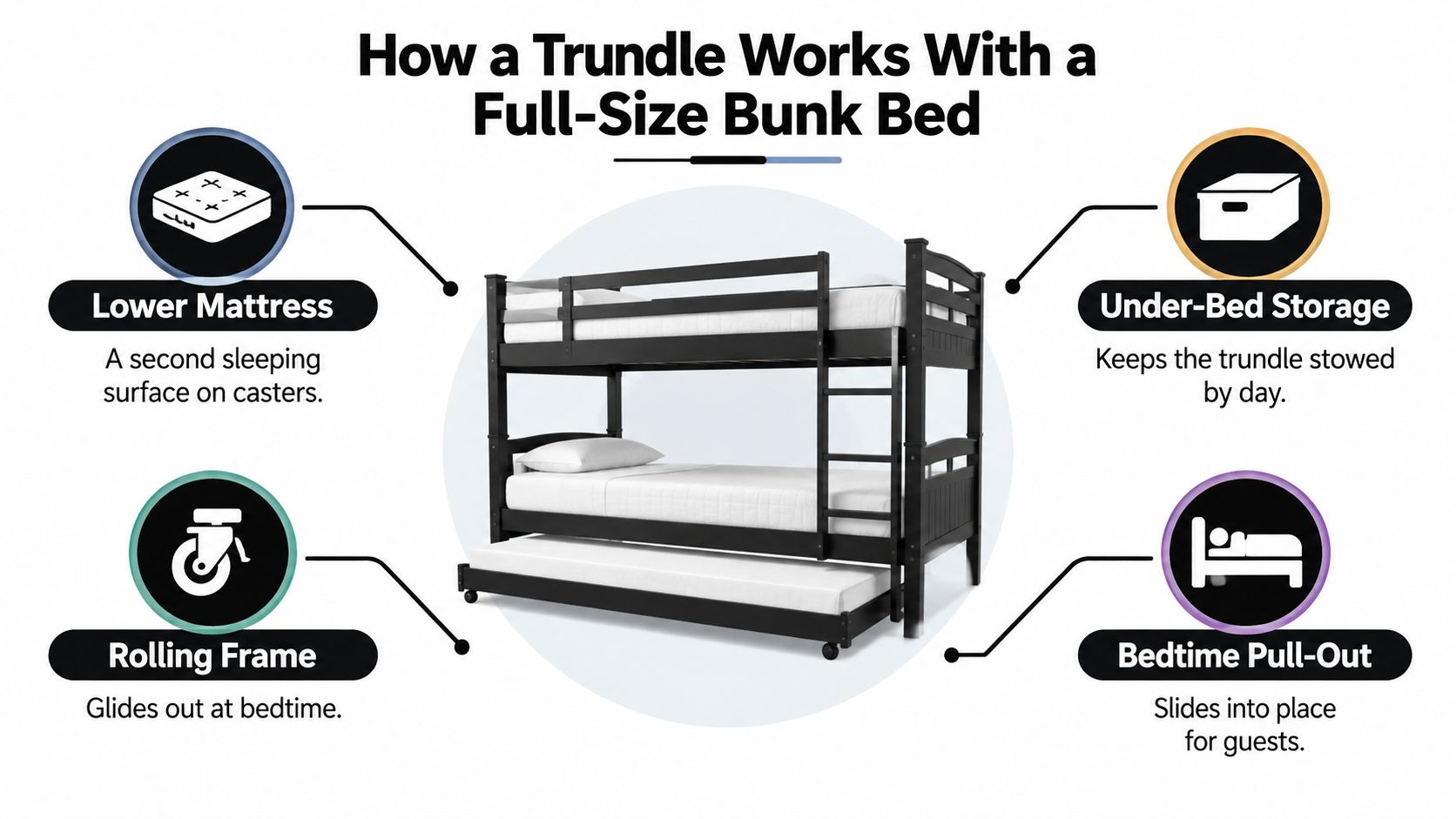
A trundle is a second mattress on a rolling frame that stores under the lower bunk until use. It behaves like a drawer that carries a sleeper instead of linens, so structure, caster quality, and floor clearance matter more than they do on a fixed bed.
In rental work, the pull-out path matters as much as the bed itself. If a dresser, nightstand, or doorway blocks that path, the trundle turns from useful capacity into a daily obstruction. A full bunk bed trundle should be drawn into the room plan from the start, not added as a loose accessory after the fact.
What changes compared with a normal lower bunk
A standard lower bunk stays put. A trundle rolls out, locks in place, and gets pushed back again after each stay, which puts repeated stress on the frame and hardware. That also changes the guest experience, since the sleep height and feel can be different from a fixed lower bunk, especially for adults.
For layout checks, the low-ceiling bunk bed layout page helps because ceiling height and pull-out room often decide whether the setup works at all. For a broader product comparison, the 2026 trundle bed buyer's guide covers what separates rental-grade trundles from consumer models. The practical point is simple, a trundle is not just another sleeping spot, it is a moving part that has to fit the room, the cleaning routine, and the turnover schedule.
Safety Requirements That Apply to a Full Bunk Bed Trundle
A full bunk bed trundle has to pass two checks in a rental: bunk bed safety above, and pull-out bed safety below. If the upper sleeping surface sits more than 30 inches above the floor, U.S. requirements treat it as a bunk bed, which brings guardrail rules with it. Federal guidance calls for at least two upper-bunk guardrails, one on each side, and the tops of those rails must rise at least 5 inches above the thickest manufacturer-recommended mattress. The wall-side rail, or the rail opposite the ladder, has to run continuously end to end. The non-wall side cannot leave end openings larger than 15 inches. Those limits are there to reduce fall and entrapment risk.
Mattress thickness is the detail owners miss most. The clearance has to match the mattress in the room, not the bare frame, so a thicker replacement can reduce rail protection without changing the bed itself. In rental work, I treat mattress swaps as a safety check, not just a comfort upgrade.
A thicker mattress can quietly undo a guardrail that looked fine when the bed was first installed.
Why the trundle needs its own safety check
The trundle needs its own review once it is pulled out and occupied. Its mattress thickness, the clearance under the upper structure, the access path, and any nearby ladder or rail all have to work together so the lower bed does not create an impact or entrapment hazard. That matters most in high-turnover rentals, where guests may not know the room layout or how the hardware moves.
For a commercial-use lens on furniture choices, comparing hotel furniture options helps show how hospitality buyers weigh durability over appearance. For a plain-language refresher on how bunk bed rules are read in real products, the CPSC bunk bed FAQ is useful alongside the bed dimensions before a layout gets finalized. The safety question is separate from the structural question, too. These rules address falls, openings, and entrapment, not a specific load rating. If you are checking headroom and room fit at the same time, the adult bunk beds page is a practical place to compare room types.
Why Trundle Durability Depends on the Base Design
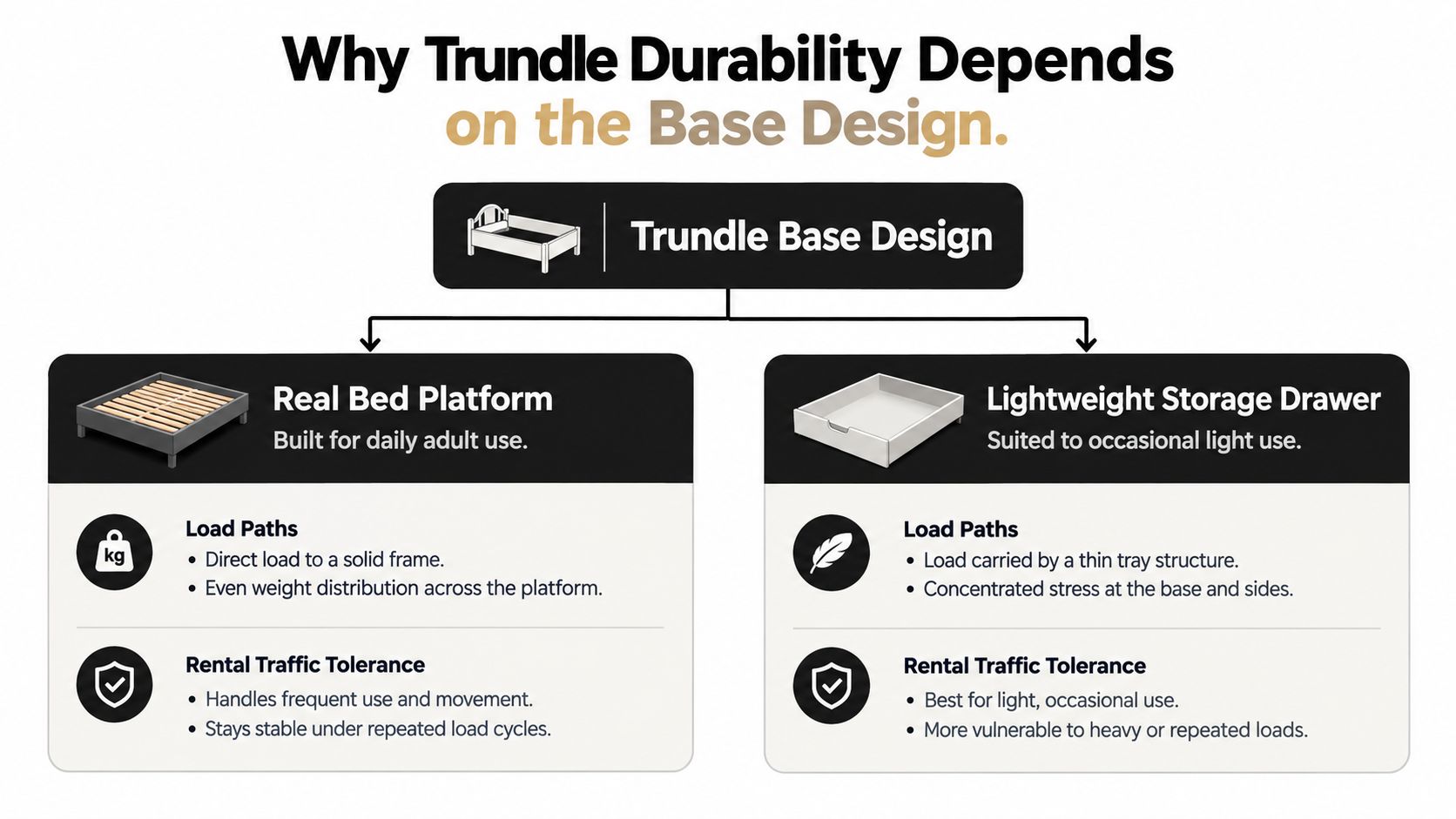
In rental use, the base design decides whether a trundle stays bookable or turns into a maintenance problem. Some units are little more than storage drawers on casters, and that is a different build from a bed platform meant to carry adult occupants night after night. The load path has to work cleanly, because occupant weight needs to move from the slats or deck into longitudinal rails, cross-members, casters or feet, and then into the floor.
That chain fails at the weakest part. In real properties, the trouble usually shows up at wheel mounts, drawer-style side panels, fasteners, and unsupported slat spans. If one of those parts flexes too much, the whole trundle starts to feel loose, and guests notice fast.
What to ask before you buy
A trundle intended for rental work should state the maximum occupant load, the mattress and foundation weight, the distributed-load test method, the wheel rating, and whether the listed capacity applies to the full assembly or only to each sleeping level. It also needs an anti-tip or stop mechanism so the unit does not wander or rack when guests get in and out. A weight claim without a documented system is just a sales claim.
Rolling hardware matters because the trundle gets pulled across flooring repeatedly. That creates cyclic loads and racking that a stationary bed never sees, especially in a busy rental where different guests handle it differently. ASTM F1427 is useful here as a voluntary benchmark, because it addresses performance requirements for falls, entrapment, structural integrity of the foundation support system, warnings, and consumer information.
If the base feels like a drawer, it will usually behave like a drawer. If it feels like a bed, it is far more likely to survive rental traffic.
For owners comparing options, the structure behind the trundle matters more than the label on the listing, and the adult bunk beds page is a practical reference point when the room needs to work for adult guests. In a rental, base durability is part of the occupancy plan, because a failed trundle takes a bookable bed off the listing until it is repaired.
When a Trundle Adds Real Capacity and When It Does Not
Capacity gets overstated all the time. A trundle adds one sleeping surface, yes, but the question is whether it adds a usable, bookable sleeping position that guests can live with. If it blocks a walkway, interferes with drawers, makes cleaning slower, or feels awkward when the upper bunk is occupied, the “extra bed” may not be worth the operational cost.
Three layouts compared
Layout | Sleeping Surfaces | Floor Space Impact | Turnover and Cleaning | Adult Comfort | Best Fit |
|---|---|---|---|---|---|
Full-over-full with trundle | Three | Highest footprint pressure when deployed | Slower, because the trundle must be pulled, made, and returned | Good only if the lower sleeping surface and mattresses are chosen carefully | Family overflow, flexible rooms |
Queen-over-queen without trundle | Two | Lower day-to-day clutter | Faster, because there's no pull-out hardware to manage | Usually stronger for adult guests | Premium rentals, simpler turnover |
Custom built-in bunk room | Varies by design | Depends on room plan, often most efficient use of the wall | Fast when the circulation path is clean and the beds are fixed | Strong when designed for adult-rated use | High-traffic rentals, repeat guests |
The trundle wins when the room needs occasional overflow capacity, especially for families that travel together and don't mind a more flexible setup. It also makes sense in a seasonal peak period where one more sleeper changes the reservation math. But if the room needs quick housekeeping, easy access, and consistent adult comfort, a fixed layout usually performs better.
That's why I separate furniture capacity from legal occupancy limits. Adding a mattress doesn't authorize more guests, and it doesn't change the property's permitted occupancy. In a rental, the bed count and the occupancy rules have to work together, not compete.
Mattress and Storage Considerations for Trundle Setups
A trundle mattress has to fit under the bunk, and that usually means a lower profile than owners first expect. That lower profile helps it slide away cleanly, but it can also reduce comfort for adults if the bed is meant for regular use. I've seen owners buy a thicker replacement mattress because it looked nicer, only to find that it no longer clears properly and starts fighting the frame.
Mattress weight matters too. A heavier mattress makes nightly pull-out harder for guests and housekeepers, and in a rental that friction gets noticed fast. If the rolling frame already takes effort to move, adding unnecessary weight usually makes the bed feel like a chore instead of a convenience.
Hardware and storage trade-offs
Caster locks or a similar stop mechanism should be part of the discussion from the start. On tile or hardwood, floor protection matters as well, especially if the pull-out path crosses a walkway or passes a door edge. A trundle that rolls smoothly but drifts when loaded can become a maintenance problem very quickly.
The other compromise is storage. That under-bed space could have been drawers or bins, which many rentals need for linens, pillows, or spare blankets. Once you choose a trundle, you're choosing sleeping capacity over storage in that footprint, and that trade-off should be intentional.
For mattress sizing and profile decisions, the safest approach is to confirm the bed's requirements before ordering anything new. In a rental, the wrong mattress can create more problems than the right one solves.
Your Trundle Readiness Checklist and Next Steps
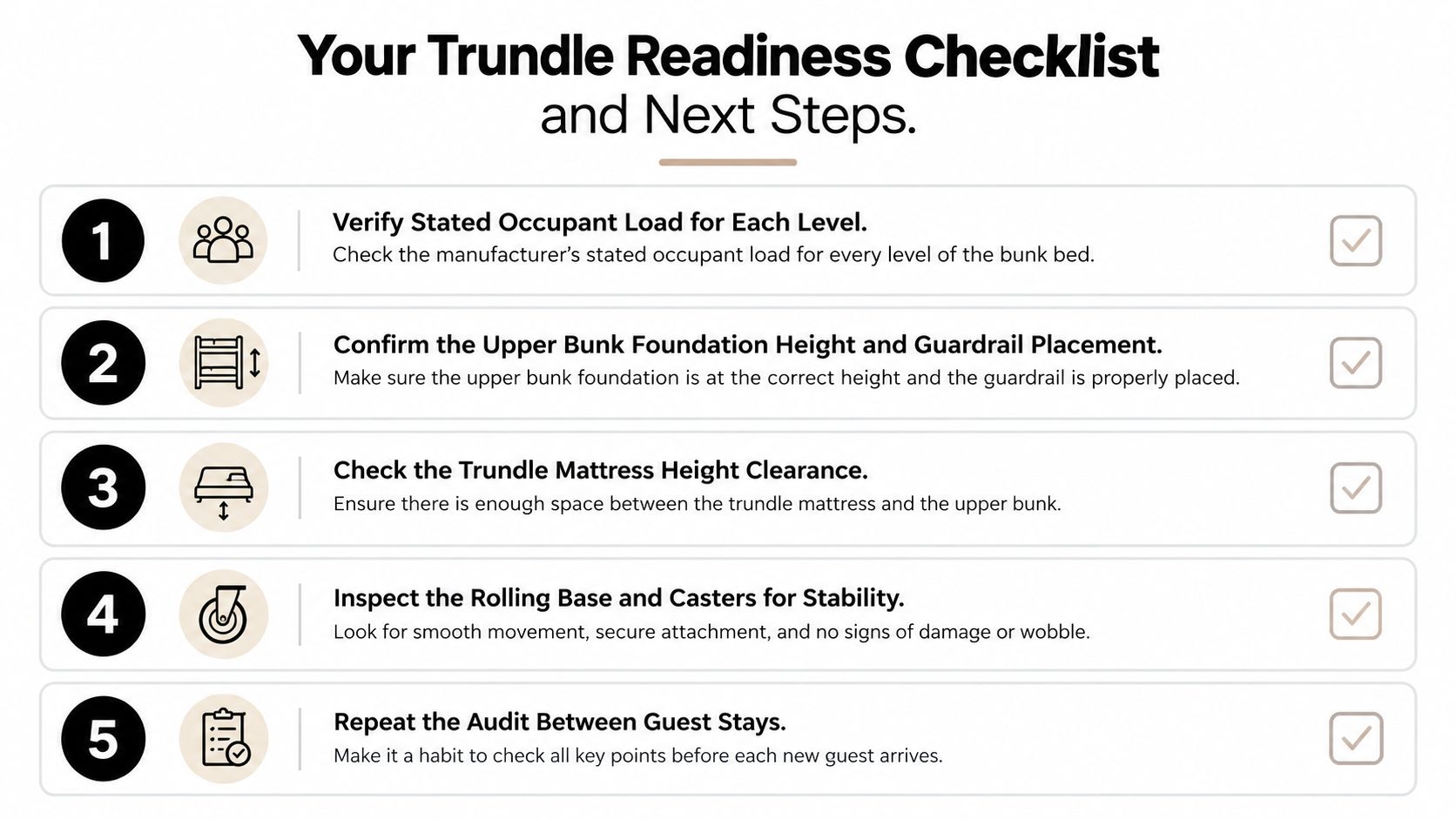
Before you buy or before the next turnover, run the same quick audit every time:
Verify the stated occupant load for each level, and don't confuse a marketing number with a tested system.
Confirm upper-bunk height and guardrail placement against the actual mattress in use.
Check trundle clearance with the actual mattress, not a bare frame.
Inspect the rolling base and casters for looseness, drag, or racking.
Repeat the check between guest stays when the room sees steady turnover.
The cleanest rental solution is usually the one that fits the room, the guest mix, and the housekeeping routine without surprises. For owners who want maximum sleeping capacity with adult-rated durability, a custom bunk system with or without a trundle is often a better fit than a mass-produced frame. Park City Bunk Beds with Nationwide Delivery builds to the room's dimensions, ceiling height, and turnover needs, which is the right place to start when a standard layout doesn't quite work.
If you're weighing a full bunk bed trundle for a vacation rental, Park City Bunk Beds with Nationwide Delivery can help you compare layouts, room dimensions, and sleeping capacity before you commit. Visit Park City Bunk Beds with Nationwide Delivery to request a quote and see configurations built for real rental use.
Comments