

Beds with Storage Underneath: A Smart Buyer's Guide

You're standing in a four-bedroom coastal rental on turnover day with two duffel bags, three sets of sheets, and nowhere to put any of them. The closets are already crowded with guest luggage, the dresser is full, and the room looks smaller because every spare item is sitting in plain sight. A bed with storage underneath can solve part of that problem, but only if you choose the right storage system for the room, mattress, climate, and guests.
The decision isn't just whether to buy a storage bed. You need to choose between drawers, an ottoman lift, a rolling trundle, or a raised platform with compartments. Each option uses space differently, creates different clearance requirements, and carries its own maintenance demands. That matters even more in vacation homes, bunk rooms, and rental properties where guests may be adults, children, or families carrying bulky gear.
Under-bed storage has been part of practical furniture design for a long time. Storage beds evolved from raised bases that lifted mattresses off the floor, improved hygiene, and reduced bending when people got into and out of bed. Manufacturers later added drawers and ottoman mechanisms as households needed more usable storage in smaller homes and apartments, with divan-style bases making configurations such as four drawers, two on each side, common in the history of storage beds.
This guide focuses on the system behind the furniture. You'll find practical advice about storage types, clearance measurements, bed height, construction materials, coastal durability, mattress airflow, rental use, and the questions that usually come up during a custom quote.
Why Storage Under the Bed Matters More Than Ever
A bedroom has to do more work than it once did. In a smaller new-build room, the bed may compete with a dresser, luggage, extra linens, beach equipment, or children's belongings. In a primary bedroom, the same space may also function as a reading area, office, dressing area, or temporary guest room. A separate storage cabinet isn't always practical, so the unused volume beneath the mattress becomes valuable.
Short-term rental guests notice clutter quickly. They may not care whether the storage is built into the bed or placed in a freestanding cabinet, but they do care about having a clear place for luggage, extra blankets, and personal items. A bed with storage underneath can help keep those items contained without taking more floor area from an already busy room.
Commercial demand reflects how established this category has become. One market estimate valued the global storage beds market at USD 674.43 billion in 2024 and projected USD 1,051 billion by 2033, while another estimated USD 4.8 billion in 2025 with projected growth to USD 6.4 billion by 2034. These estimates differ substantially, but both describe a mainstream category shaped by space-saving needs in urban homes, apartments, and hospitality settings according to the market estimates summarized here.
Four systems, four different jobs
Drawers work well for folded linens, clothing, and items guests need regularly. They require usable side or foot clearance and a surface that allows smooth opening.
Lift-up storage offers the largest uninterrupted cavity, which suits bulky bedding or seasonal items. It needs a clear lifting path and reliable hardware.
Trundles can hold a second mattress or function as a storage drawer. They're especially useful in children's rooms and bunk layouts.
Platform compartments create the most integrated appearance. They're a strong fit for built-in bunk beds, storage stairs, and rental rooms where the furniture needs to look intentional.
For a rental host, the best choice depends on turnover habits, guest age, room access, humidity, and how often the stored items need to be reached. For a homeowner, the deciding factor may be whether the bed replaces a dresser or hides occasional-use belongings.
Main Types of Beds With Storage Underneath
The right storage style starts with how you'll use the space, not how much volume a product listing claims to provide. A drawer bank may hold less than a lift-up cavity, but it usually offers faster access and better organization. A trundle may provide a second sleeping surface, while a fixed compartment may be more durable in a high-traffic bunk room.
Drawer storage
Drawer storage is the most familiar configuration. Drawers may be mounted on one or both long sides, placed in the footboard, or divided into practical layouts such as two drawers on each side. They're useful for sheets, towels, clothing, books, and other items that guests or family members need to retrieve without lifting the mattress.
Plan for approximately 12 to 18 inches of clearance in front of a drawer, along with a reasonably flat rolling surface. Hardwood, tile, and low-pile carpet are usually easier environments than thick carpet or uneven flooring. The drawback is access. If a nightstand, wall, neighboring bed, or luggage blocks the drawer face, the storage becomes difficult to use.
Lift-up ottoman frames
An ottoman bed raises the mattress platform, usually with assisted hardware, to expose one large storage cavity. It makes better use of the entire footprint than divided drawers and can accommodate bulky comforters, pillows, or seasonal items.
The trade-off is operational. The mattress must be compatible with the lifting mechanism, and the room needs a clear runway for raising the platform. A lift-up bed also asks users to open the entire system when they need one item, which can be inconvenient during frequent guest turnovers. For a primary bedroom with occasional access, it can be an excellent choice. For a rental bunk room, drawers or compartments are usually easier for guests and cleaners.
Trundle storage
A trundle slides beneath the main bed. A true rolling trundle holds a second mattress and expands sleeping capacity, while a storage trundle contains linens, toys, or equipment instead.
The sleeping version earns its place in children's rooms, family cabins, and bunk rooms where an extra bed matters more than a deep storage cavity. It also gives a host more flexibility during family bookings. The limitation is floor clearance and deployment space. Guests need room to pull the trundle out, walk around it, and return it without scraping walls or furniture.
Raised platform compartments
A platform storage bed raises the mattress on a fixed casework base. The interior can be divided into cubbies, shiplap-front compartments, drawer banks, or hinged sections. This style is particularly effective for built-in bunk beds, custom stairs, and room-wide systems where the storage should look like part of the architecture.
Its main advantage is durability and visual control. The builder can match the bed to the wall finish, floor plan, ladder, stairs, and lighting. Its drawback is permanence. Fixed compartments aren't as easy to reconfigure as rolling bins or a freestanding bed.
Storage bed types at a glance
Type | How It Opens | Typical Clearance Needed | Best For | Main Trade-Off |
|---|---|---|---|---|
Drawers | Side or footboard pull-out | Front and side access for the drawer face | Linens, clothing, frequent-use items | Blocked drawers become unusable |
Lift-up ottoman | Mattress platform raises | Clear lifting path above and around the bed | Bulky, occasional-use storage | Requires compatible hardware and mattress |
Rolling trundle | Unit rolls out from beneath bed | Open floor area in front of the bed | Extra sleeping capacity and children's rooms | Needs deployment space |
Storage trundle | Unit rolls out as a bin | Open floor area for access | Bedding, toys, and supplies | Less useful if packed too tightly |
Platform compartments | Doors, lids, cubbies, or drawers | Designed into the fixed base | Custom bunk rooms and integrated furniture | Harder to relocate or modify |
Sizing, Clearance, and Height Trade-Offs
Storage under the bed works only when the opening, container, and room layout agree. Start with the finished distance from the floor to the bottom of the bed frame. The mattress and box spring do not count toward usable clearance. A storage guide recommends reserving 1 inch below that measurement for lids and uneven floors. Rolling bins commonly need at least 7 inches, while lower platform beds may offer only 5 to 6 inches, making flat bins a better choice in this under-bed measurement guide.
Construction changes the available options. Solid-slab platforms typically sit at 4 to 7 inches, platforms with small legs at 6 to 10 inches, and metal tube frames or box-spring setups at 7 to 13 inches in its storage configuration comparison. Those ranges determine whether you can install drawers, slide in bins, or fit a rolling trundle.
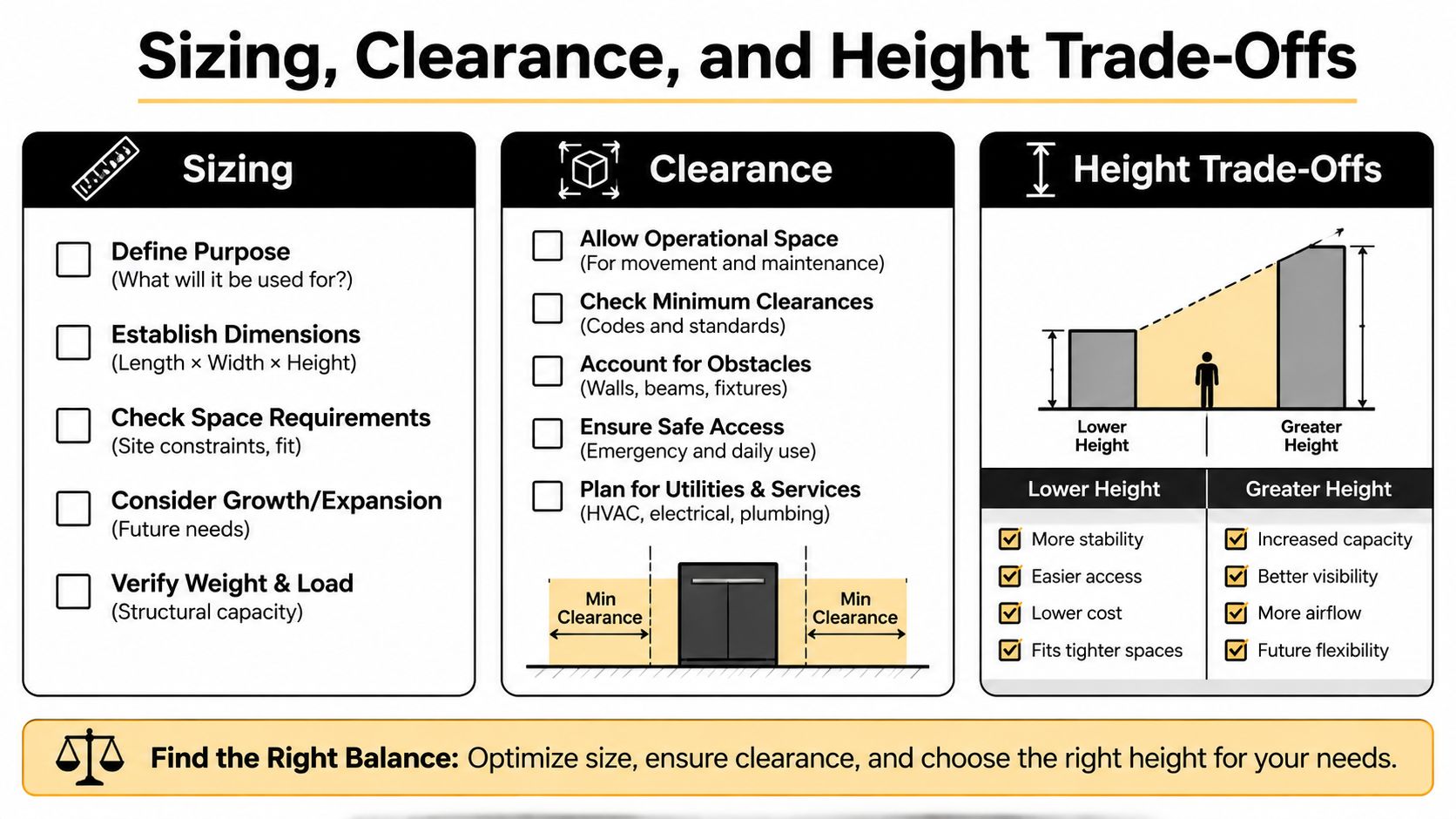
Use a simple purchasing rule
Choose a bin whose maximum height is the floor-to-frame measurement minus 1 inch, following this storage-bin selection guide. Measure the completed bed after flooring, rugs, and platform trim are installed. A box spring does not automatically create usable storage space.
Height also affects daily comfort. A taller base adds room for storage but raises the mattress, which can make entry harder for children, older adults, and guests with mobility limits. Some storage beds become high enough to require a step stool, one of the drawbacks covered in this discussion of storage-bed advantages and drawbacks.
For bunk rooms, compare the finished bed height with our bunk-bed height guide before choosing drawers or compartments. Clearance affects storage capacity, mattress airflow, guardrail position, and the effort required to make the upper bunk.
Check the room beyond the footprint
A bed can fit on a floor plan and still fail in use. Confirm drawer extension, trundle rollout, door swing, closet access, and the walking route from the entry door. Lift-up platforms need overhead clearance and an unobstructed opening path. Custom bunk rooms also require checks for stair placement, ladder access, ceiling height, guardrails, and bed-making space beside the wall.
Storage cannot compromise bunk safety. Keep the gap between guardrails, frame, and mattress within 3.5 inches. Secure drawers and shelves against forward tipping, and keep storage low near the floor rather than creating climbable surfaces along bunk sides, as outlined in this bunk-bed storage safety guidance. For rental properties, favor hardware and openings that guests can use repeatedly without forcing the frame or blocking ventilation.
Materials, Finishes, and Coastal Durability
A storage bed carries more moving parts than a basic platform. Drawers add runners and faces. Lift-up systems add hinges and assisted hardware. Trundles add wheels and repeated floor contact. The best material choice depends on how often the bed moves, how much moisture the room sees, and whether the piece needs to match an existing interior.
Solid wood, including oak and maple, gives a substantial appearance and can suit rustic bunk beds, modern rustic rooms, and mountain properties. It can also move as humidity changes, so construction details and finish coverage matter. Plywood is useful for stable casework and drawer boxes, particularly when a builder needs strength with controlled weight. MDF provides a smooth surface for painted panels and shiplap-style faces, but exposed edges need protection from water and impact.
Metal frames can offer a clean modern profile and avoid some wood movement concerns, but they need careful attention to joints, finish quality, noise, and corrosion protection. In a coastal rental, salt air and humidity make untreated metal a poor choice for exposed hardware. Wood isn't automatically safer either. Poorly sealed panels can swell, and trapped moisture can leave odors inside enclosed compartments.
Compare the construction choices
Material | Pros | Cons | Best For |
|---|---|---|---|
Solid wood | Warm appearance, substantial feel, repairable surfaces | Can respond to humidity and adds weight | Rustic bunk rooms, premium bedrooms, cabin interiors |
Plywood | Stable casework, efficient strength, suitable for drawer boxes | Visible edges need proper finishing | Custom platforms, drawers, storage stairs |
MDF | Smooth painted finish, consistent panels | Vulnerable to water at unprotected edges | Painted built-in-look systems and decorative faces |
Metal | Clean profile, useful for contemporary designs | Requires corrosion and noise control | Modern rooms with protected, well-finished hardware |
Specify the finish for the environment
For beach homes and coastal rentals, choose sealed wood surfaces, protected fasteners, and finishes selected for humidity exposure. Avoid storing damp towels, wet swimwear, or beach gear directly inside closed compartments. Let those items dry first, then place them in washable containers or designated bins.
A finish doesn't eliminate maintenance. Clean salt and dust from exposed surfaces, inspect drawer runners and fasteners, and look for swelling around floor-level components. For a coastal bunk-room layout, review examples and material considerations in this guide to beach house bunk beds.
Mattress Compatibility and Airflow
Storage under the bed changes the air movement around the mattress. A fully enclosed cavity can trap humidity, especially in a coastal bedroom or any room that stays warm and damp. Experts recommend slatted supports, ventilation holes, or breathable spacer layers instead of sealing the mattress against an airtight base in this mattress ventilation guidance.
Start with the mattress and foundation specifications before choosing the storage frame. The mattress must fit the platform without blocking drawer movement or adding excessive height to a bunk. A thick mattress can also reduce guardrail protection on an upper bunk, so the finished mattress height needs to be part of the design conversation.
Build air movement into the system
Use a slatted base or another support system that allows air to circulate beneath the mattress. Avoid airtight plastic bins packed tightly against the underside of the platform. Leave clear circulation paths, especially when drawers or compartments occupy much of the base.
Room humidity matters as well. Practical guidance recommends keeping humidity around 30 to 50 percent, using a dehumidifier when needed, and airing or rotating the mattress periodically to reduce moisture retention and uneven loading in this storage-bed maintenance guidance.
Practical rule: More storage volume isn't automatically better. If filling every cavity blocks airflow, reduces access, and creates a musty environment, the design is overbuilt.
For rental properties, choose breathable or washable containers, label the contents, and keep a maintenance routine. Recent guidance also warns that dust, damp, and allergens can collect beneath beds, particularly when storage is enclosed or overstuffed in this under-bed storage safety advice.
A mattress with breathable construction can help, but it can't compensate for a sealed base and poor room ventilation. The frame, foundation, storage containers, and climate all work together.
Built-In Storage Features for Vacation Rentals and Bunk Rooms
A rental bunk room often has to sleep more people without feeling like a crowded warehouse. That calls for a coordinated system, not a collection of separate beds and plastic bins. A custom bunk layout can combine sleeping platforms, storage stairs, drawers, shelving, outlets, lighting, and guardrails while using the room's actual dimensions.
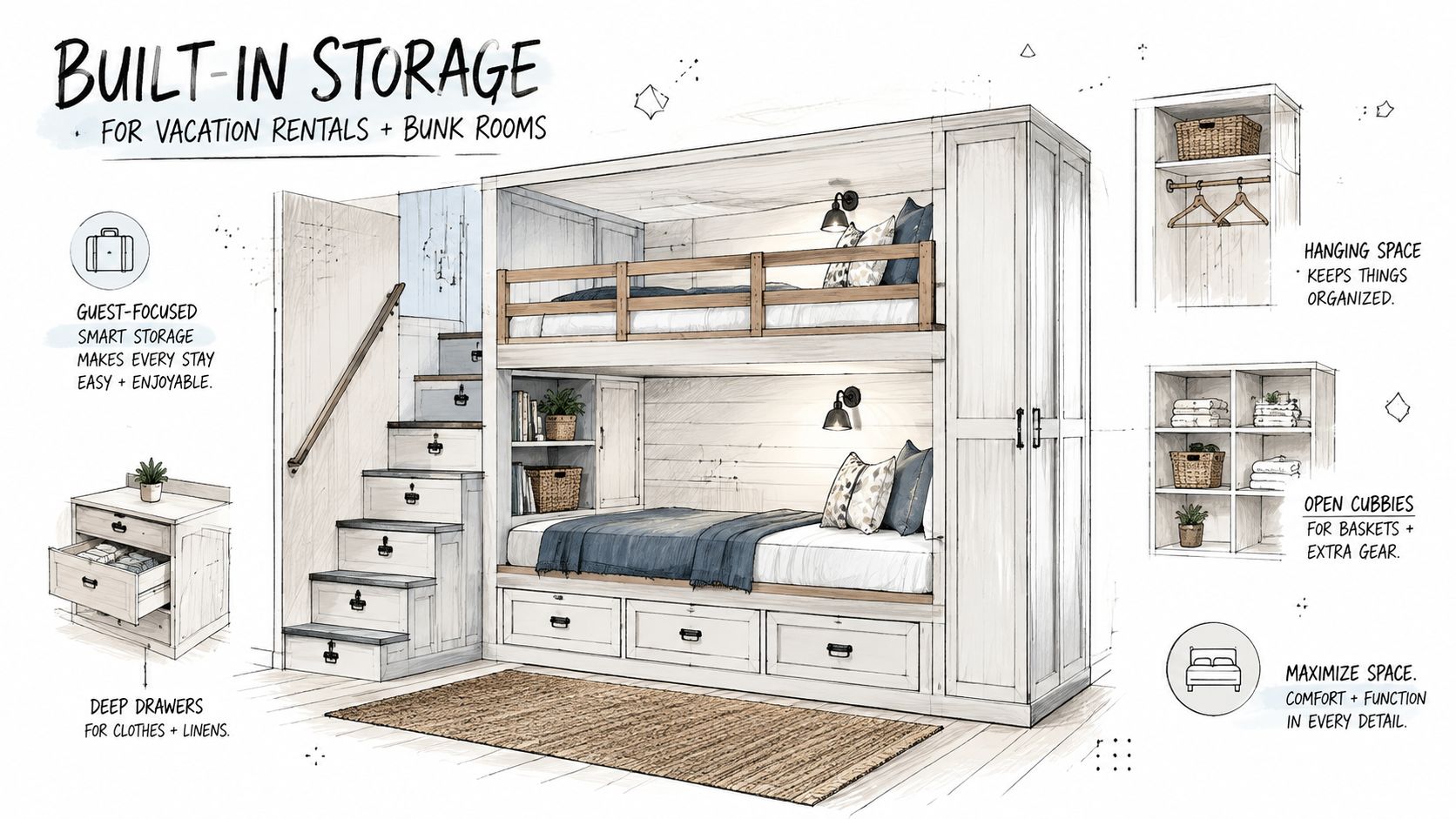
Consider a family checking into a beach condo with towels, clothing, chargers, and children's gear. A bunk with deep drawers under the lower bed gives guests a place for folded items. Storage stairs can hold additional supplies while providing a more comfortable route to the upper bunk. Integrated shelves keep small belongings off the mattress and floor.
The same logic works in a ski home or family cabin. Guests may arrive with bulky clothing, helmets, bags, and extra blankets. A fixed platform compartment can handle less frequently used bedding, while accessible drawers hold items guests need throughout the stay. In a smaller room, a hallway bunk or quad bunk system can turn an awkward passage or underused room into a functional sleeping zone.
Use each feature deliberately
Storage stairs can replace a ladder where the room has enough width, while drawers keep the stair volume useful.
Integrated lighting helps guests find belongings without searching through a dark compartment.
Shelving and outlets give phones, books, and small items a controlled landing place.
Under-bed drawers suit linens and clothing that need regular access. See how under-bed storage drawers work in custom bunk rooms.
Trundles add a flexible sleeping surface when the room must serve changing group sizes.
Built-in-look panels create a finished appearance without requiring every component to be permanently framed into the building.
Custom bunk beds differ from mass-produced furniture because the builder can account for ceiling height, wall angles, mattress dimensions, door locations, and the actual circulation path. That flexibility matters in older cabins, coastal condos, converted basements, and rooms with low or sloped ceilings.
A polished bunk room also supports the property's overall design. Rustic bunk beds may suit a mountain home, while modern rustic bunk beds with painted panels and clean hardware can fit a higher-end rental. The goal isn't decoration for its own sake. It's to make a high-use room orderly, durable, and easy for guests and cleaners to understand.
For homeowners and rental hosts comparing custom systems, Park City Bunk Beds with Nationwide Delivery builds custom bunk configurations with options such as storage stairs, under-bed drawers, trundles, integrated lighting, outlets, and coastal finishes.
Cost, ROI, and When Storage Under the Bed Pays Off
Storage under the bed pays off when it replaces a problem that would otherwise require more furniture, more floor area, or more cleaning time. It doesn't pay off just because the product has a large cavity. A rental host should first identify what the storage needs to accomplish.
For a vacation rental, the strongest justification is often function. Drawers can reduce loose linens and guest clutter. A trundle can add sleeping flexibility. A custom platform can make a bunk room work in a footprint that wouldn't accommodate separate beds and dressers. These improvements may support a cleaner listing presentation and smoother turnovers, but storage alone doesn't guarantee a higher nightly rate or stronger bookings.
Judge the upgrade against the property
Ask four questions:
How often will guests access it? Frequent-use items belong in drawers or open shelving, not a lift-up cavity.
Who uses the room? Children, older adults, and guests with mobility limits may need lower bed heights and simpler access.
What does the room replace? Storage has more value when it removes the need for a dresser or frees floor space for circulation.
What does the property promise? A premium beach rental or ski home benefits from a cohesive bunk-room design more than a property where storage is rarely visible to guests.
Cost vs ROI snapshot
The supplied project information doesn't establish reliable purchase prices or lifespan figures for these storage systems, so a responsible comparison must avoid invented price bands. Use this table as a decision framework rather than a pricing promise.
Storage Bed Type | Avg. Price Range (USD) | Expected Lifespan | Rental ROI Notes |
|---|---|---|---|
Drawer bed | Not established | Depends on construction, hardware, and maintenance | Strong when guests need regular access to linens or clothing |
Lift-up bed | Not established | Depends on lifting hardware, mattress compatibility, and use | Useful for bulky storage, less convenient for frequent turnovers |
Trundle bed | Not established | Depends on rollers, frame construction, and floor conditions | Adds sleeping flexibility or concealed storage |
Custom platform system | Not established | Depends on materials, joinery, hardware, and environment | Makes sense when it solves layout, capacity, and appearance needs together |
For a rental owner, custom built bunk beds usually deserve consideration when they solve several issues at once: sleeping capacity, awkward dimensions, guest storage, durability, and visual cohesion. If the room already has a dresser, ample closets, and no need for extra beds, a storage upgrade may be unnecessary.
Frequently Asked Questions and Next Steps
Can a lift-up bed damage the mattress?
A properly matched lift-up frame shouldn't be selected blindly. The mattress weight, foundation type, hinge system, and lifting hardware need to work together. If the mattress is too heavy or the platform is overloaded, opening may become difficult and the mechanism may wear faster.
Ask the builder or manufacturer for the compatible mattress specifications before ordering. For a rental, also consider whether guests and cleaners can operate the lift safely and consistently. If the answer isn't clear, drawers or fixed compartments are the more practical choice.
How do you ventilate storage under a bed in a humid climate?
Choose slatted supports, ventilation openings, or breathable spacer layers. Leave airflow paths beneath the mattress, avoid airtight bins, and don't pack every compartment tightly. If the bedroom remains humid, use a dehumidifier and inspect the storage for dampness or musty odors.
Keep wet towels, swimwear, and outdoor equipment out of closed storage until they've dried. This matters in coastal markets, where moisture can affect both the mattress and the storage casework.
Are trundle beds suitable for adult guests?
A trundle can suit adults when the mattress, frame, clearance, and access are intentionally designed for that use. A low rolling bed may be inconvenient for guests with mobility limitations, and the room needs enough open floor area for the trundle to deploy.
For an adult-focused rental, compare the trundle's sleeping height and access with a queen-over-queen or other custom bunk configuration. A trundle is valuable when flexibility matters. It isn't automatically the right answer for maximum comfort.
What should I measure before requesting a quote?
Record the room length and width, ceiling height, door and closet locations, floor type, and the distance from the floor to the bottom of the bed frame if an existing bed is involved. Note where drawers or trundles could open without blocking walkways. For bunk rooms, include window locations, outlets, stair access, mattress thickness, and any sloped ceiling areas.
Then make a short priority list:
Storage contents: Linens, clothing, toys, luggage, or extra mattresses.
Access frequency: Daily, every turnover, or seasonal.
Guest profile: Children, adults, families, older guests, or mixed groups.
Room objective: More sleeping capacity, less clutter, a built-in look, or all three.
A custom builder can then recommend drawers, a lift-up base, a trundle, storage stairs, or fixed platform compartments based on the room rather than forcing the room to fit a standard product.
Park City Bunk Beds with Nationwide Delivery offers custom bunk-room designs that can combine adult bunk beds, quad bunk beds, triple bunk beds, storage stairs, under-bed drawers, trundles, lighting, and coastal finishes for vacation homes and rental properties. Visit Park City Bunk Beds with Nationwide Delivery to review custom sleeping and storage options, then submit your room dimensions and storage priorities for a practical design conversation.
Comments